
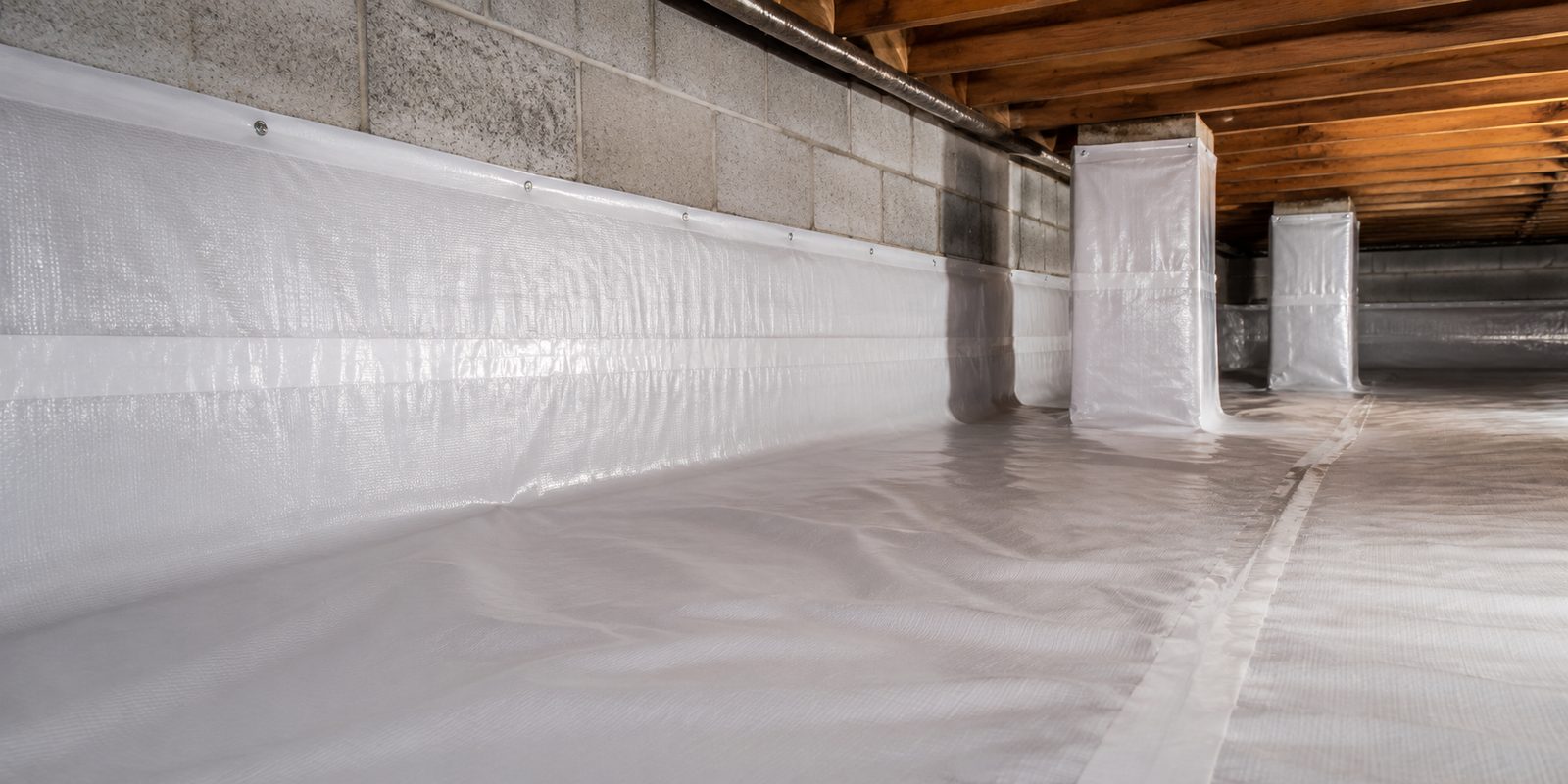
Encapsulation seals the crawl space off from the ground below and the outside air around it, turning a vented cavity into a dry, controlled space that behaves like part of the house. In the Tennessee Valley it is close to the highest-value thing you can do to an older home, because it fixes damp, smell, cold floors and energy loss with one intervention.
Why Venting Fails Here and Sealing Works
A vented crawl space assumes outside air is drier than the air underneath your house. For much of the year in north Alabama the opposite is true.
Between June and September the dew point outside sits in the low seventies for weeks at a time. The ground under your house and the framing above it hold nearer sixty-five degrees. Open the vents and you are moving warm, wet air across cool surfaces, and the moisture condenses out onto the coldest thing available — the underside of your floor, the ductwork, the joists.
Sealing the space and controlling its humidity removes the mechanism entirely. There is no longer a supply of wet air, so there is nothing to condense.
What a Proper Encapsulation Includes
A reinforced polyethylene liner, usually twelve to twenty mil, across the whole floor and up the foundation walls, sealed at the seams and mechanically fastened at the top rather than taped and hoped for.
Vents sealed and insulated. This is the step people flinch at and it is the point of the whole exercise.
A dedicated dehumidifier sized for the volume, with a condensate route that actually drains somewhere rather than into a bucket somebody has to remember to empty.
Insulation moved from the joists to the perimeter walls, which is where it belongs once the space is inside the building envelope.
And before any of it, drainage. If liquid water enters the crawl space, a liner traps it against the ground rather than removing it, and you have built a swimming pool with a lid.
What It Does Not Fix
Encapsulation is not a structural repair. It will not lift a sagging floor, replace a rotten girder or stop settlement, and any contractor who implies otherwise is selling you the wrong thing. Rotten wood needs replacing first, supports need correcting first, water needs a route out first.
What it does is stop the conditions that caused the rot from continuing.
Cost and Payback
Encapsulation on a typical Huntsville house runs from roughly $5,000 to $15,000 depending on square footage, clearance, how much drainage work is needed and whether a dehumidifier is included. The national average sits around $5,500, though that number reflects simpler jobs than the wetter houses in this region.
The payback is partly on the utility bill, because you stop conditioning a damp cavity and the ducts stop losing their cooling into it. But the larger return is structural: wood held below twenty percent moisture does not rot, and the joists you already own carry on doing their job.
Free inspection, and we will tell you honestly if drainage alone would do it.