
Moisture control is the ongoing part — keeping a crawl space dry once the water has been stopped and the liner is down. It matters because rot is not an event, it is a condition, and the condition is measurable.
The Number That Decides Everything
Wood decay fungi need moisture content above roughly twenty percent to become active. Below that, timber can sit for a century and be sound. Above it, decay proceeds quietly and continuously.
Relative humidity in the crawl space is the lever that controls it. Held below about fifty-five percent, wood equilibrates comfortably under the threshold. Left at eighty percent through a Tennessee Valley summer, it does not.
This is why a moisture problem is worth measuring rather than eyeballing. A crawl space that looks dry can still be running at eighty percent humidity and quietly destroying the floor above.
What Controls It
A sealed vapor barrier stops evaporation from the soil, which in an unlined crawl space is by far the largest moisture source. Bare earth under a house can release many gallons a day into the air.
Closed vents. In this climate an open vent in July is a moisture supply line.
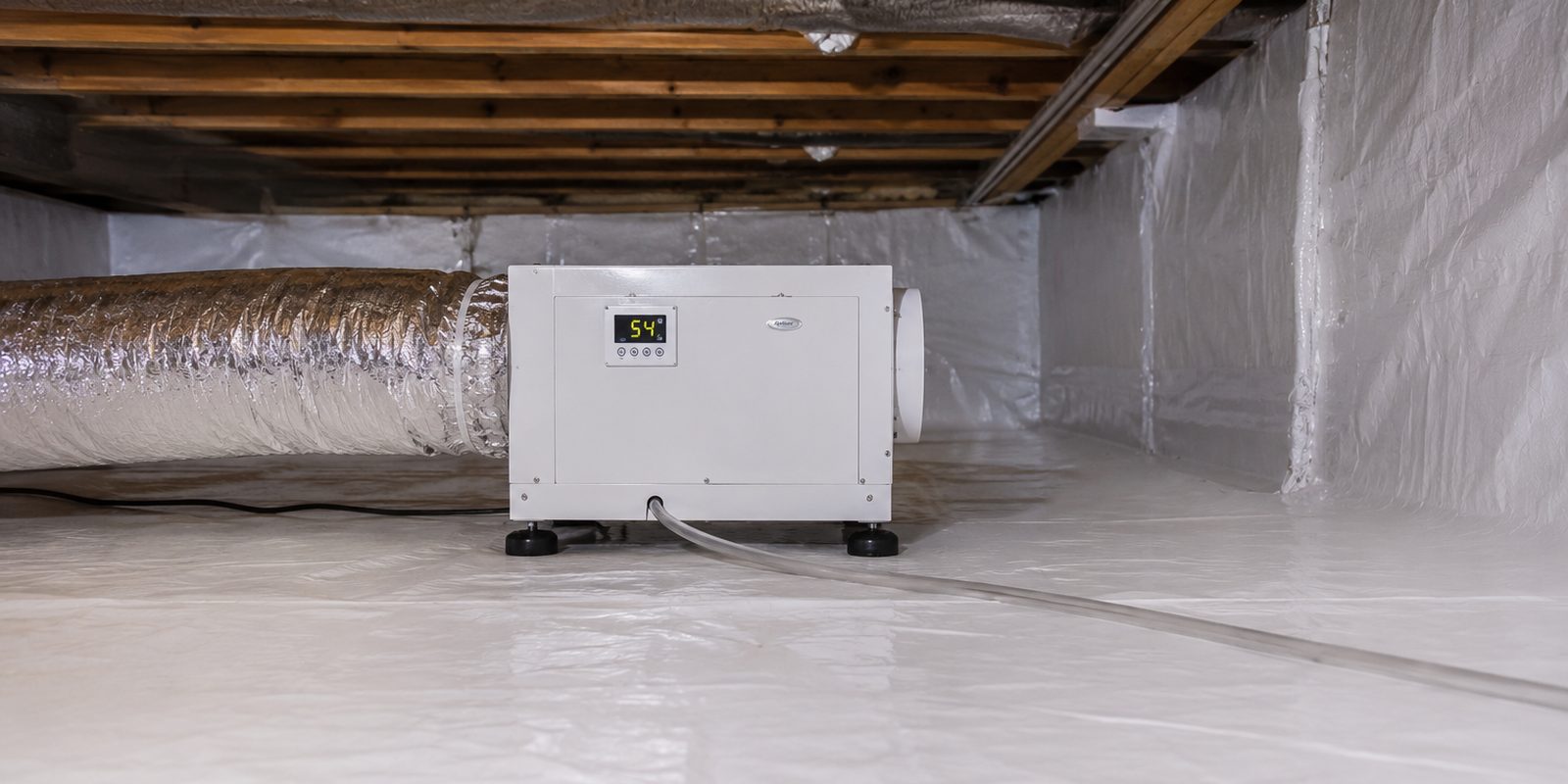
A dehumidifier sized for the space, draining to a condensate pump or gravity line. A domestic unit from a hardware store in the corner of a crawl space is not this — it will run continuously, ice up and die.
Air sealing at the rim joist, which is a significant and frequently ignored leakage path between the crawl space and the house.
Monitoring Rather Than Assuming
The useful upgrade almost nobody is offered is a humidity sensor left in the crawl space, reporting to your phone. It costs very little and it changes the relationship with the space entirely: instead of finding out something has failed when the floor goes soft, you see the number climb the week the dehumidifier drain blocks.
If you have already had encapsulation done and nobody left you a way to see the humidity, you are trusting a system you cannot observe.
Signs It Is Not Under Control
Condensation on ductwork or pipes. A musty smell on the ground floor, particularly in summer. Insulation that has come loose. Cupping in hardwood flooring above. Doors sticking seasonally.
Any of those is worth a measurement rather than a guess.